
A beginner's guide to India's classical dance forms and how to tell them apart
From the sculptural poses of Bharatanatyam to the spins of Kathak, India's classical dances each carry their own grammar. A short guide for first-time viewers.
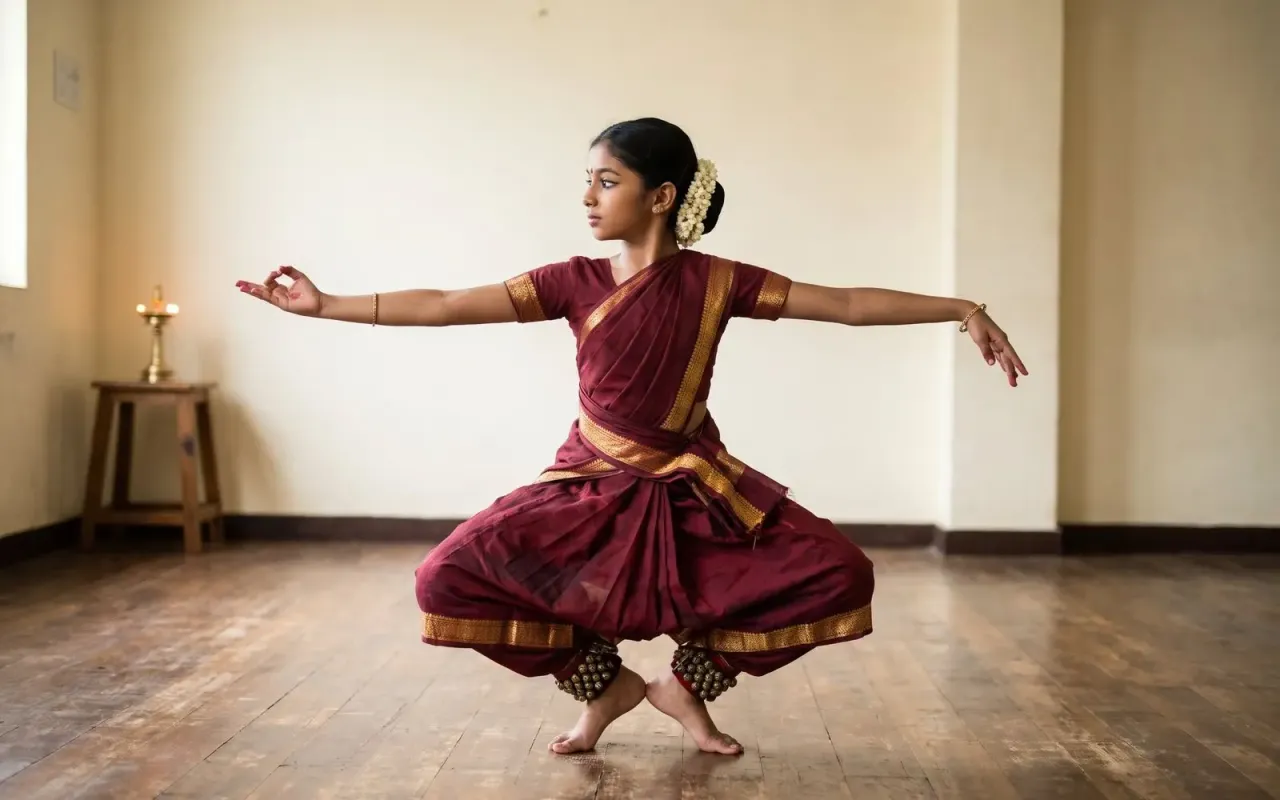
Sit through a classical dance recital for the first time and it can feel like watching a conversation in a language you only half know. The hands are speaking, the eyes are speaking, the feet are keeping time with the drummer, and somewhere in all of it a story is being told. A little background makes the experience far richer.
The shared roots
Most Indian classical dance traditions trace their ideas to the Natyashastra, an ancient treatise on performance. They share a vocabulary of hand gestures, called mudras, and a focus on abhinaya, the art of expression. They also balance two elements: pure dance, which is rhythmic and abstract, and expressive dance, which interprets a poem or story.
The Sangeet Natak Akademi recognises several forms as classical, each tied to a region:
- Bharatanatyam from Tamil Nadu, known for its geometric lines and a half-seated stance.
- Kathak from north India, with rapid footwork, ankle bells and dazzling spins.
- Kathakali from Kerala, a dance-drama of elaborate make-up and towering headgear.
- Kuchipudi from Andhra Pradesh, lively and theatrical, sometimes performed on the rim of a brass plate.
- Odissi from Odisha, recognisable by its graceful S-shaped body curve.
- Manipuri, Mohiniyattam and Sattriya, from Manipur, Kerala and Assam respectively, each gentle and flowing in its own way.
Costume and music also offer clues. Carnatic music usually accompanies southern forms, while Kathak is typically set to Hindustani music, with the tabla driving its rhythmic passages.
You do not need to decode every gesture. Read the programme note if there is one, since it usually explains the story behind each piece. Watch the dancer's face during the slower sections; that is where the emotion lives. During the faster sections, enjoy the dialogue between feet and drum.
Why it matters to you
Many cities host free or low-cost recitals at cultural centres, temples and college festivals, particularly during the winter season. Watching one is an easy way to connect with traditions that have been passed down through generations of teachers and students.
Young dancers today are also experimenting, setting classical technique to contemporary themes and sharing short performances online. The forms are old, but they are very much alive, and an informed audience helps keep them that way.