
Bhupender Yadav orders zero tolerance on open burning as Delhi air stays poor
The environment minister told Delhi-NCR civic bodies to set up ward-level quick response teams. Delhi has recorded poor or worse air for over two weeks, with GRAP Stage III in force since November 6.
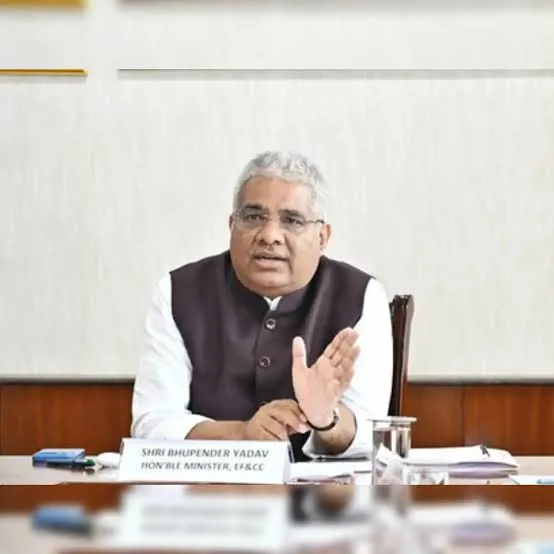
Union Environment Minister Bhupender Yadav on Thursday directed civic bodies in Delhi and the National Capital Region to take a "zero-tolerance approach towards open burning of municipal waste, dry leaves and biomass", as air quality in the capital remained in the poor to very poor range.
Yadav chaired a virtual review of the Winter Action Plans of the municipal bodies of Delhi, Ghaziabad, Noida, Gurugram and Faridabad from Antalya in Turkiye, where he is leading India's delegation at the COP31 climate conference, All India Radio reported.
"The current winter period demands visible and sustained action on the ground," Yadav said, according to the broadcaster. He asked for strict enforcement, daily monitoring and clear accountability at every level.
Directions to civic bodies
- Quick response teams in every ward to act on complaints within hours.
- Prompt penal action against those burning waste, leaves or biomass, and responsibility fixed on officers for enforcement failures.
- Faster road repairs and more mechanical road-sweeping machines, run in double shifts during winter, to control dust.
- Dedicated nodal officers and hotspot-specific action plans, reviewed regularly by mayors.
- Public complaints to be closed only after "physical verification and resolution".
Air quality this week
Delhi's average air quality index (AQI) was 246, in the "poor" category, at 7 am on Tuesday, according to Central Pollution Control Board (CPCB) data cited by Business Today, which reported that the city had recorded poor or worse air for 16 consecutive days. PM2.5 was the main pollutant at 50 of 59 monitoring stations.
Readings varied widely across the city. Outlook reported that several stations, including Sirifort, Pusa and ITO, recorded "very poor" levels above 370 around midnight on Monday, while CPCB data cited by ANI showed 198 near India Gate early on Tuesday. The 24-hour average AQI was 290 at 4 pm on Monday, down from 367 on Saturday, after stronger winds and light rain, according to CPCB figures reported by Outlook.
The Air Quality Early Warning System forecast "very poor" air from Tuesday, with similar conditions likely over the following six days. Stage III of the Graded Response Action Plan, which restricts dust-generating construction and demolition, stone crushing and some categories of polluting vehicles, has been in force across the NCR since November 6.
Health guidance
Under the CPCB's National Air Quality Index, "very poor" air can cause respiratory illness on prolonged exposure. The Delhi government's air quality portal advises people to avoid outdoor activity at that level, wear an N95 mask if they must go out, keep doors and windows shut and work from home where possible. It advises children, older adults and people with heart or lung disease to stay indoors and to consult a doctor if symptoms get worse.