
Ebola cases in Congo pass 11,000 as WHO says outbreak is far from controlled
WHO chief Tedros said Bundibugyo Ebola cases in the Democratic Republic of the Congo have more than doubled in three months, with 400 to 500 new cases still reported every week.
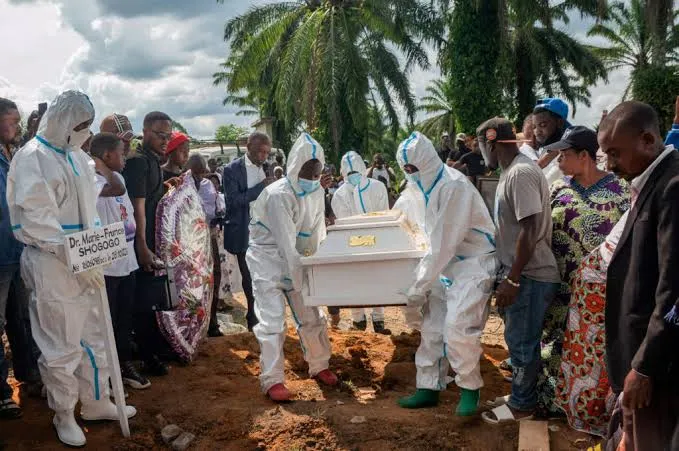
The Ebola outbreak in the Democratic Republic of the Congo has passed 11,000 confirmed cases and more than doubled in three months, World Health Organization Director-General Tedros Adhanom Ghebreyesus said on Tuesday, warning that gains in some areas did not mean the epidemic was under control.
Speaking at the opening of the third meeting of the WHO Emergency Committee on the outbreak, Tedros said there had been more than 11,000 cases and 5,400 deaths across 67 health zones in eight provinces, according to UN News. The outbreak is caused by the Bundibugyo virus, a species of Ebola for which there is no licensed vaccine or specific treatment.
"Progress in some places is not control of the outbreak as a whole," Tedros said. He said 400 to 500 new cases were still being reported every week and that two-thirds of confirmed deaths were happening outside Ebola treatment centres.
Children hit hard
Children account for more than a quarter of confirmed cases and a third of deaths, according to WHO. Seven in ten confirmed cases among children under five have died, Tedros said.
The European Centre for Disease Prevention and Control (ECDC), in its update of November 16, put the total at 11,376 confirmed cases, including 5,568 deaths, as of November 15. Ituri province accounts for the largest share, with 7,858 cases and 3,715 deaths, followed by Nord-Kivu with 2,860 cases and 1,590 deaths, the agency said. Haut-Uele, Tshopo, Bas-Uele, Nord Ubangi, Sud-Kivu and Sud Ubangi have also reported cases.
The ECDC said the outbreak was likely larger than reported because of gaps in data and limited follow-up of contacts.
Spread beyond Congo
Kenya has reported nine linked cases, including two deaths, traced to a case imported from Congo, and Nigeria has reported one imported case, Tedros said. "The risk beyond the DRC's borders is not theoretical," he said.
According to the ECDC, Kenya's last case was reported on October 20 and all contacts there had completed monitoring by November 11. The Nigerian patient, a woman who had travelled from Uganda, was evacuated to Switzerland and discharged on November 11.
Tedros also voiced concern that some countries still impose blanket travel restrictions, which he said hinder the response and discourage countries from reporting outbreaks. WHO advises against travel and trade bans and recommends targeted screening at points of entry.
Vaccines and the response
WHO said rapid transmission has stopped in most of the early epicentres and that the number of testing laboratories has grown from two to more than two dozen. Two candidate vaccines designed specifically for the Bundibugyo virus will be added to an ongoing trial in the coming weeks, Tedros said.
The ECDC said the TUMAINI Phase 2/3 trial, which is evaluating the licensed Ervebo vaccine and other candidates, was launched in Bunia on October 23. Candidates in early development include vaccines from the University of Oxford, Moderna, IAVI and Minapharm, it said.
WHO declared the outbreak a public health emergency of international concern on May 17, two days after it was first reported in Ituri. It is the Democratic Republic of the Congo's 17th Ebola outbreak.
The ECDC assesses the risk to the general population in Europe as very low. Several health workers and other people exposed in Congo have been evacuated to or diagnosed in European countries since May.