
Growing herbs on a city balcony: a starter guide for small Indian homes
Tulsi, mint, coriander and curry leaves can thrive in a few pots by the window. What beginners need to know about light, soil, water and patience.
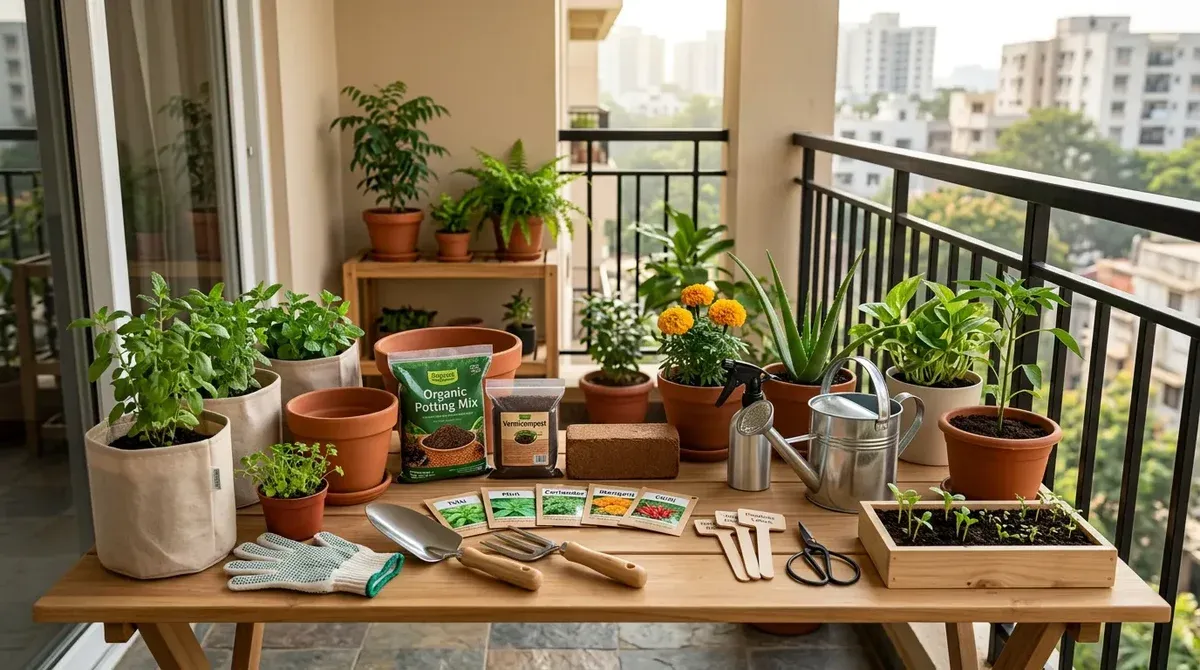
There is a particular satisfaction in reaching out of the kitchen window to snip a handful of mint for chutney or a sprig of curry leaves for the tadka. You do not need a garden for it. A sunny balcony, a windowsill or even a grille with a few hanging pots is enough to start a small herb patch that earns its keep.
Start with the right plants
Choose herbs that you actually cook with and that suit Indian conditions. Good beginner options include:
- Mint, which grows enthusiastically and is happiest in its own pot so that it does not take over.
- Tulsi, hardy and fond of sun.
- Coriander, quick to sprout from crushed seeds but prone to flowering in strong heat, so sow in batches.
- Curry leaf, slow at first but long-lived once established.
- Lemongrass, which can grow from a fresh stalk placed in water until it roots.
Most herbs want several hours of direct sunlight. Spend a day noticing which part of your balcony gets the most sun and when. In very hot regions, a spot with morning sun and afternoon shade often works better than a scorching west-facing ledge.
Use pots with drainage holes; waterlogged roots are the most common reason herbs fail. A light potting mix made of garden soil, compost and something to loosen it, such as cocopeat or sand, drains well. Terracotta pots breathe and keep roots cool, while plastic ones are lighter for railings.
Push a finger into the soil. If the top inch feels dry, water deeply until it runs out of the bottom. In summer that may mean daily watering; in the monsoon, perhaps not at all for days. Move pots out of the path of heavy rain if water collects in them, which also prevents mosquito breeding.
Regular trimming encourages bushier growth. Pinch off the top leaves rather than stripping a stem bare, and nip off flower buds on basil and mint to keep the leaves coming.
Why it matters to you
A herb patch saves small, frequent trips to the vegetable vendor and means fresher flavours on your plate. Many people also find the daily ritual of watering and checking on plants calming after a long day.
Begin with two or three pots and add more as you learn what thrives in your corner of the city. Before long, you may find yourself swapping cuttings with neighbours.