
How film certification works in India, from U to A and everything in between
Every film released in Indian cinemas carries a certificate. Here is what the letters mean, who decides them and what they tell you before you buy a ticket.
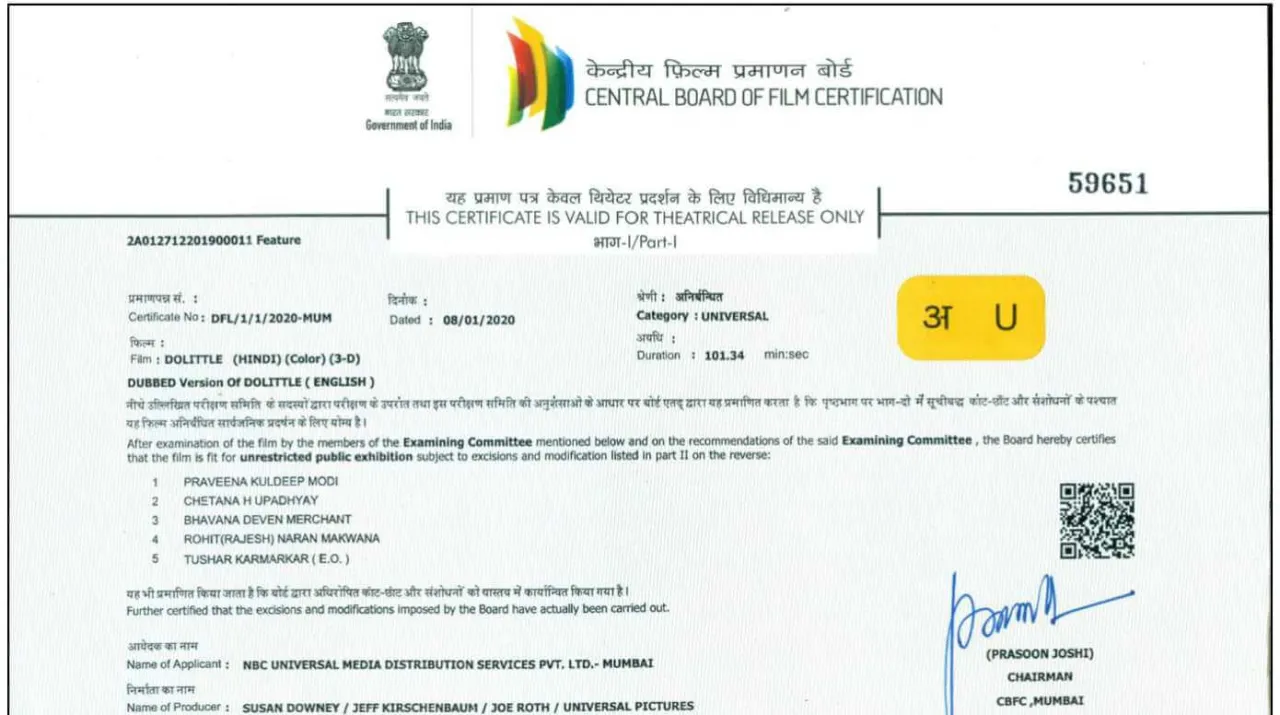
Before the opening credits roll in an Indian cinema hall, a small certificate flashes on screen for a few seconds. Most viewers barely notice it. Yet that slide is the end point of a legal process that every film meant for theatrical release has to pass through.
Who does the certifying
The job belongs to the Central Board of Film Certification, a statutory body under the Ministry of Information and Broadcasting, commonly called the censor board. It works under the Cinematograph Act, a law that dates back to the early years of the Republic and has been amended several times since. Producers submit their film to a regional office, and an examining committee watches it before recommending a category.
The categories are simple on paper:
- U means unrestricted public exhibition, suitable for all ages.
- UA means the film is open to all, but parents should use their judgement for younger children. Newer age-based markers within this category point to the age group the film suits.
- A restricts the film to adult audiences.
- S is reserved for specialised audiences such as doctors or scientists.
Examiners weigh themes, violence, language, drug use and sexual content, and they consider context rather than counting scenes. A brief fight in a family drama may pass with a U, while sustained, graphic violence will usually push a film towards A. The board can also suggest cuts or modifications, and producers sometimes accept them to secure a wider category, because a U or UA certificate opens the door to family audiences and television broadcast.
If a filmmaker disagrees with a decision, the matter can go to a revising committee. Beyond that, the route now leads to the courts.
Why it matters to you
For parents, the certificate is the quickest guide to whether a film suits a child. It is not a judgement on quality, and it does not replace your own call. A UA film may still contain moments that unsettle a sensitive eight-year-old, so reading a synopsis or a parents' guide helps.
It is also worth knowing what the certificate does not cover. Streaming platforms work under a separate self-classification framework set out in the IT rules, with their own age labels and parental controls. A show on your phone and a film in a multiplex may therefore follow different systems.
As more films move between theatres, television and streaming within weeks, the question of one consistent, easily understood rating system for all screens is likely to come up again. Until then, a few seconds of attention to that opening slide is time well spent.