
Kabaddi rules made simple: raids, tackles, bonus points and the all-out
Kabaddi looks chaotic to new viewers but follows clear rules. Here is a guide to how points are scored, what a super tackle is, and why the do-or-die raid changes games.
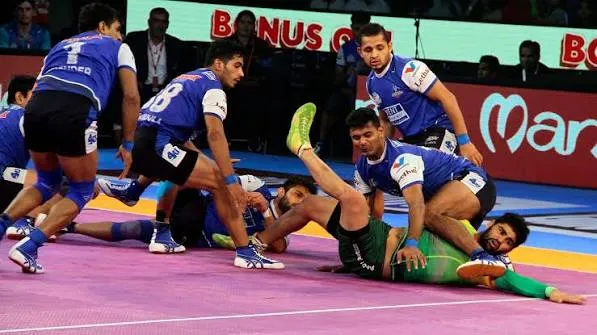
Kabaddi is one of the oldest games played on Indian soil, born in village courts of mud and dust. Today it fills indoor arenas and draws large television audiences. If you are watching for the first time, the rules are easier than they look.
The basics. Two teams of seven players take the court, which is split into two halves by a midline. Teams take turns sending a single player, the raider, into the opponents' half. The raider must touch one or more defenders and return to their own half without being stopped. In traditional play the raider chants 'kabaddi' continuously to show they are holding one breath; professional leagues instead use a fixed time limit of 30 seconds for each raid.
Scoring points
- Touch points: every defender the raider touches and escapes from is out, and the raiding team earns a point for each.
- Tackle points: if defenders stop the raider from returning, the defending team earns a point.
- Bonus point: a raider who crosses the bonus line deep in the opponents' half, with one foot in the air, when at least six defenders are on court, earns an extra point.
- All-out: eliminating every player of the opposing side earns two extra points, and the whole team returns.
Revival. Players who are out sit on the sidelines and come back one by one as their team scores. Each point won by a side revives one of its eliminated players, in the order they went out. This keeps games swinging, since a strong raid can bring several players back at once.
Two rules that change games. A super tackle happens when a defending side with three or fewer players stops a raider. It earns two points instead of one, rewarding a brave defence when the odds are stacked against it.
The do-or-die raid applies in professional formats after a team makes two consecutive empty raids, meaning raids with no points scored. On the third raid, the raider must score, or be declared out. Coaches plan carefully around these moments.
Why it matters
Kabaddi has been part of the Asian Games since 1990, and India has a strong record in the sport. Professional leagues have turned players from small towns into recognisable athletes and created careers in coaching, physiotherapy and analytics.
For new fans, the best tip is to watch the raider's feet and the defenders' formation. Once you understand the chain tackle and the bonus line, the game's split-second tactics come alive.