
One country, one clock: why India runs on a single time zone
India Standard Time is set five and a half hours ahead of UTC. Here is how it is calculated, who keeps it accurate, and why the Northeast keeps asking for its own clock.
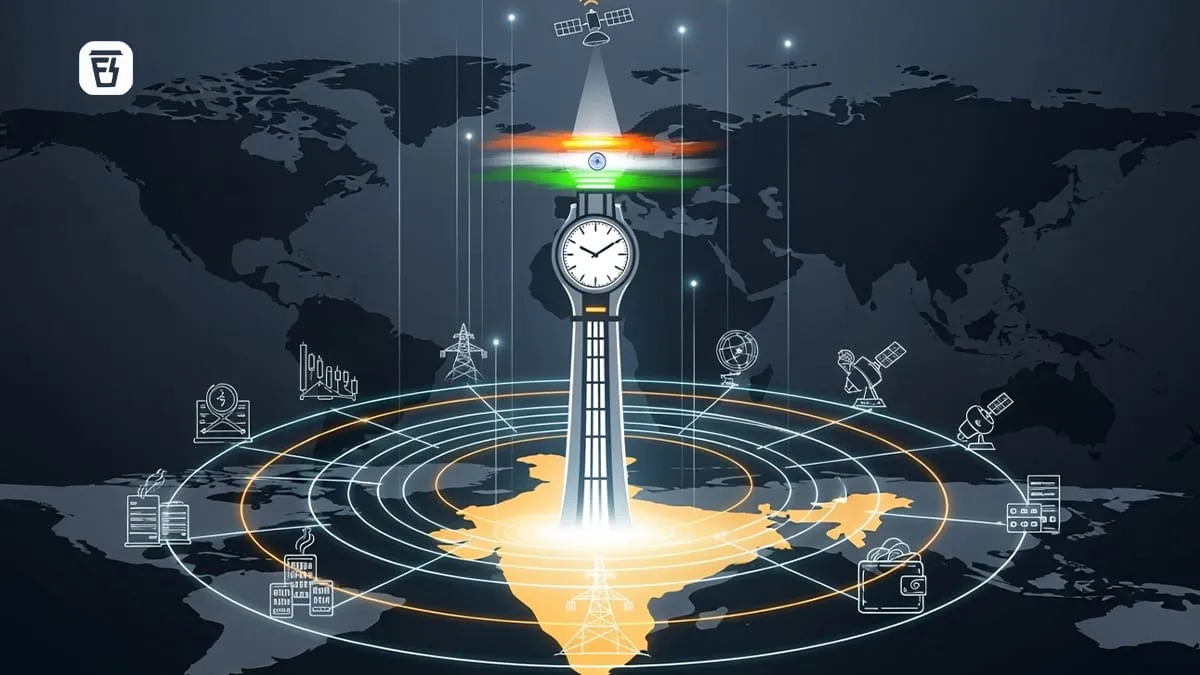
In Arunachal Pradesh the sun can rise close to two hours before it does in the Rann of Kutch. Yet both places read the same time on their phones. That is the everyday consequence of India's decision to run the whole country on one clock.
How IST is fixed. India Standard Time is five and a half hours ahead of Coordinated Universal Time, the global reference. It is based on the 82.5° east line of longitude, which passes close to Mirzapur in Uttar Pradesh. Choosing a meridian near the middle of the country was meant to balance daylight between east and west.
The country's official time is maintained by the CSIR-National Physical Laboratory in New Delhi, which uses atomic clocks and links to international timekeeping networks. Accurate time matters far more than most people realise: banking transactions, stock exchanges, mobile networks, power grids and satellite navigation all depend on clocks that agree to tiny fractions of a second.
The case for a second zone
The country spans close to 30 degrees of longitude, and the gap shows up most sharply in the Northeast. In winter, it can be dark by late afternoon in parts of the region, while offices and schools keep running by a clock set for the plains. Critics argue this wastes daylight, raises electricity use in the evenings and affects productivity. Tea gardens in Assam have long followed an informal local time, an hour ahead, known as 'chaibagan time'.
Supporters of a single zone point to the risk of confusion in railway timetables, flight schedules and broadcasting, and to the symbolic value of one national time. Scientists have studied options, including a separate zone for the eastern states, but the single standard remains in place.
Why it matters to you
Time zones are not merely technical. They shape when children walk to school, when shops open and how much power homes burn after dark. If you live in eastern India, your body clock and the official clock may be slightly out of step every day.
Whether India ever adopts a second zone will depend on weighing administrative simplicity against daylight and energy savings. For now, one clock ticks for more than a billion people.