
Opinion: Odisha's cyclone drill works. The next test is what happens after the wind drops
Odisha moved more than three lakh people before Cyclone Akvan. That model deserves to be copied, but recovery, livelihoods and repeated storms now need the same rigour.
This is an editorial by the TUI News editorial desk.
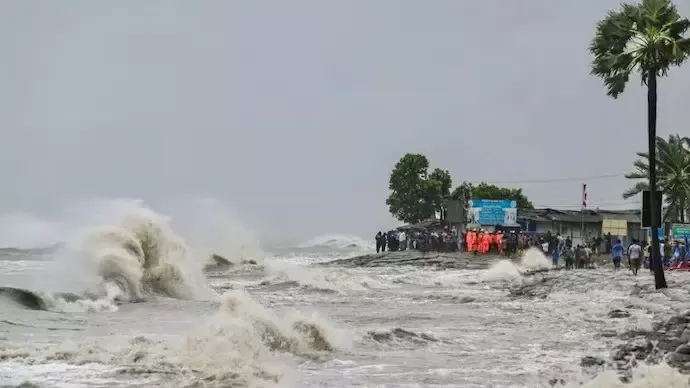
Cyclone Akvan began crossing the coast near Gopalpur on Friday morning, the India Meteorological Department said, after weakening from a severe cyclonic storm to a cyclonic storm. By then the Odisha government had moved more than three lakh people to safety, according to the state government figures reported by DD News and Business Standard. The state said it had readied 9,341 cyclone shelters and deployed 423 rescue teams. Chief Minister Mohan Charan Majhi set a zero-casualty goal across 20 districts, and 4,170 pregnant women were shifted to safe places, Business Standard reported.
Those numbers describe a system, not a one-off effort. It deserves recognition, and it deserves to be studied by every coastal state.
A model built over 27 years
Odisha learnt its lessons the hardest way. The super cyclone of 1999 killed about 10,000 people. Since then, successive governments of different parties have built a network of shelters, trained village volunteers, linked warnings to block offices and treated evacuation as a duty rather than an appeal. The result is that a storm like Akvan is now measured mainly in disruption, not in lives.
That continuity across governments is the real lesson. Disaster management in Odisha has stayed above routine politics, and the people of the coast have learnt to trust the warnings. Trust is slow to build and quick to lose. It survives only when officials are honest about forecasts, including when a storm turns out weaker than feared.
The harder part starts now
Evacuation is the most visible part of cyclone response, but it is not the whole of it. Fishing families lose days or weeks of income each time the sea is closed. Farmers in Ganjam and Puri face standing crops flattened by wind and rain; the IMD had warned of a storm surge of up to one metre in low-lying parts of those districts. Small traders lose stock. Dozens of trains were cancelled, and road links were disrupted.
DD News noted that Akvan is the third cyclone to threaten Odisha in 24 days. Repeated alerts carry their own cost: people leave homes and work again and again, and each round eats into savings. A household that has evacuated three times in a month needs more than a shelter.
In the desk's view, the state and the Centre should focus on four things in the coming weeks:
- Fast, simple relief. Crop and boat damage assessments should be completed quickly and payments made directly, with clear timelines published district by district.
- Shelter upkeep. Thousands of shelters are only useful if they have working toilets, water, power backup and separate space for women, the elderly and people with disabilities. An annual public audit would help.
- Insurance that pays. Parametric insurance, which pays out automatically when wind or rain crosses a set threshold, could reach fishers and small farmers faster than claim-based schemes.
- Shared learning. Andhra Pradesh, West Bengal and Tamil Nadu face similar storms. A standing forum where district officials trade methods would spread what works.
Preparing for a warmer Bay
Scientists have long linked warmer seas to stronger and more frequent storms in the Bay of Bengal. Whatever the trend in any one season, the coast should plan for more storms, not fewer. That means building houses and schools to withstand wind, protecting mangroves that blunt surges, and planning power networks so that lights come back within days rather than weeks.
Odisha has shown that saving lives is achievable. The next goal should be to make sure that a cyclone does not push families into debt or out of work. That is a less dramatic task than a mass evacuation, but it matters just as much.