
Opinion: The ICJ has ruled on the Rohingya. The work of delivering justice now falls to governments
The world court found Myanmar responsible for genocide against the Rohingya. It cannot enforce its own orders, so states, including India, must help turn the judgment into results.
This is an editorial by the TUI News editorial desk.
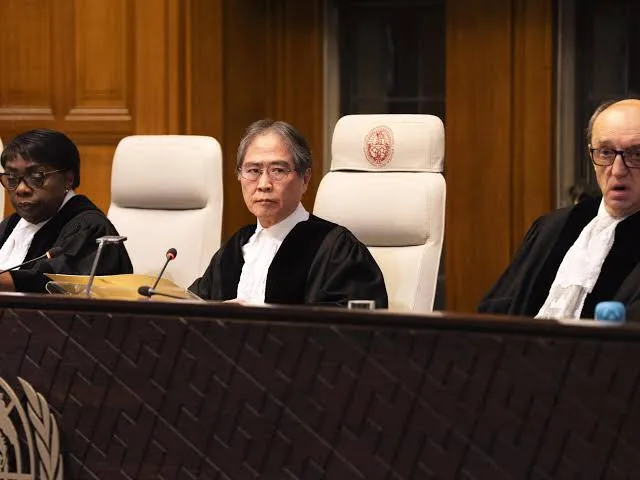
On Thursday, the International Court of Justice ruled by nine votes to six that Myanmar committed genocide against the Rohingya in northern Rakhine state. Reading the judgment at The Hague, court President Yuji Iwasawa said the court found that Myanmar's security forces "killed thousands of Rohingya civilians". According to Al Jazeera and The Conversation, it is the first time the court has found a state responsible for genocide.
The case was brought by The Gambia in 2019. Its government called the verdict "a historic day for international justice". For the Rohingya, many of whom have lived in camps for close to a decade, the ruling is a formal recognition of what they have described for years.
What the court ordered
The court's orders, as reported by The Conversation and Al Jazeera, are wide-ranging. Myanmar must investigate and, where warranted, prosecute those responsible, including military commanders. It must prohibit genocide in its national law and give guarantees against repetition. It must allow displaced Rohingya to return safely and voluntarily, return or replace their property, help search for the disappeared and provide rehabilitation. Where restitution is not possible, it must pay compensation, the amount of which the court will decide later. Myanmar has two years to report on what it has done.
The judgment is final and binding. But, as The Conversation notes, the court has no police or troops. Under Article 94 of the UN Charter, the Security Council can act to secure compliance, yet it has never done so.
Why this matters to India
More than 700,000 Rohingya fled to Bangladesh during the 2017 crackdown, and the UN says about 1.2 million now live in camps around Cox's Bazar, Al Jazeera reported. That is one of the largest refugee concentrations in the world, on India's eastern flank. A population with no prospect of safe return, and with shrinking aid, is a humanitarian problem first and a regional stability concern as well.
India has close ties with both Bangladesh and Myanmar and is building connectivity projects through Rakhine. That gives New Delhi more standing than most capitals to encourage practical steps. It also means India has a direct interest in a Rakhine that is stable, governed by law and safe for all its communities.
What should follow
The desk believes the response should be practical, not rhetorical:
- Support compliance. Governments with influence in Naypyitaw, India among them, should press quietly and consistently for the steps the court listed, starting with investigations and legal reform.
- Sustain aid to the camps. Bangladesh cannot carry this burden alone. Donors should restore and increase funding for food, health and schooling in Cox's Bazar.
- Keep return voluntary. The court spoke of safe and voluntary return. No refugee should be pushed back before those conditions exist.
- Use the Security Council. Members should be ready to discuss the judgment under Article 94 rather than set it aside.
Yanghee Lee, a founding member of the Special Advisory Council for Myanmar, put it plainly, according to Al Jazeera: "justice has been decided, but not yet delivered." The court has done its part. Whether this judgment changes lives in the camps now depends on governments, and on whether they treat the ruling as a starting point rather than an end.