
Highway encroachment order no licence to demolish without due process, Supreme Court clarifies
The court said its April directions to clear national highways did not decide whether any structure is an encroachment, and sent disputed demolition cases to High Courts.
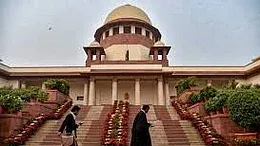
The Supreme Court on Wednesday clarified that its April directions to remove encroachments along national highways cannot be used to demolish disputed structures without following due process, and asked property owners challenging demolition notices to take their cases to the High Courts.
A bench of Justices Vikram Nath and Aparesh Kumar Singh said its April 13, 2026 order had not decided whether any individual structure was an unauthorised encroachment. That question "was neither examined nor adjudicated upon by this Court," the bench said, according to LiveLaw.
Background to the order
The April directions came in suo motu proceedings on road safety that the court opened after accidents at Phalodi in Rajasthan and other places. The court had then ordered authorities to identify and clear unauthorised encroachments on national highways.
The applicants before the bench were people facing demolition action by the National Highways Authority of India (NHAI) and other agencies, which said their structures stood within the highway's right of way. The applicants disputed land ownership, the demarcation of the highway, the extent of the right of way, and whether their land had ever been acquired or compensation paid, according to reports of the order.
What the court said
The bench said a claim of ownership or lawful occupation does not, by itself, stop authorities from removing an encroachment. But where that claim is disputed, an authority's assertion that a structure lies inside the right of way "cannot be treated as a substitute for the determination required under law," it said.
Removal should ordinarily follow Section 26 of the Control of National Highways (Land and Traffic) Act, 2002, which provides for notice and a chance to object, the court said. Relying on its earlier ruling in Gyan Prakash v. Union of India, it held that the April directions "cannot be invoked as an independent justification for dispensing with the requirements of the statute." Such disputes may need an examination of revenue records, acquisition proceedings and survey reports, the bench noted.
Interim protection and next steps
The court allowed the applicants to approach their jurisdictional High Courts, and said those already before High Courts may continue. Existing interim protection will remain until the High Courts decide the cases.
Where no interim protection was in place, NHAI and other authorities have been restrained from demolishing or removing the disputed structures, or taking other coercive steps under the challenged notices, until the High Courts rule. The High Courts were asked to decide the matters quickly and in accordance with law.
The bench made clear that it had expressed no view on the merits of the owners' claims. The protection applies only to the structures named in the applications, creates no equity in favour of the applicants, and does not permit fresh construction or new encroachment on highways. The April 13 directions otherwise remain in force, subject to compliance with applicable laws.