How the UN Security Council veto works, and why reform is so hard
Five countries can block any substantive Security Council decision. Here is how voting works, what an abstention means, and why changing the system has stalled for decades.
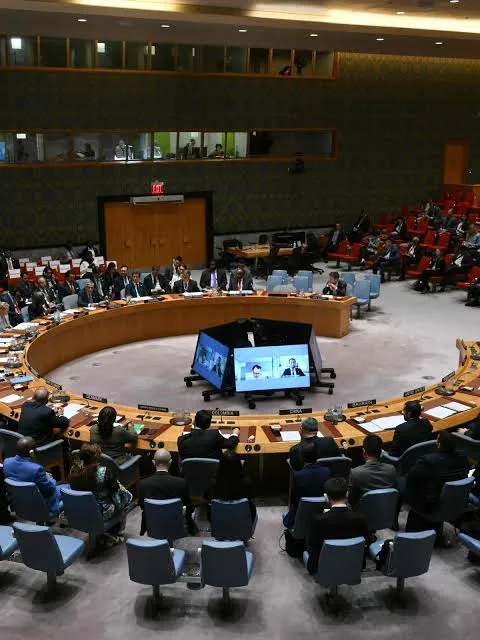
The United Nations has 193 member states, but on questions of war and peace, five of them hold a power the rest do not. That power is the veto, and it explains a great deal about why the UN sometimes acts swiftly and sometimes not at all.
Who sits on the Council. The Security Council has 15 members. Five are permanent: the United States, the United Kingdom, France, Russia and China, the principal victors of the Second World War. The other ten are elected by the General Assembly for two-year terms, with five seats changing every year and seats shared out by region. India has served as an elected member several times.
How a vote works. On procedural matters, any nine votes are enough. On substantive matters, such as sanctions or authorising a peacekeeping mission, a resolution needs at least nine votes in favour and no negative vote from a permanent member. That negative vote is the veto. An abstention by a permanent member does not block a resolution, a practice that has been accepted for decades.
Council resolutions can be legally binding on all member states, which is why the body matters so much more than most UN forums.
Workarounds and pressure
When the Council is deadlocked, the General Assembly can step in. Under a mechanism dating to 1950, it can meet in emergency session and recommend collective measures, although its resolutions are not binding in the same way. More recently, the Assembly agreed that it would automatically hold a debate whenever a veto is cast, requiring the vetoing country to explain itself before the wider membership.
Why reform keeps stalling
Almost everyone agrees the Council reflects the world of 1945 rather than today. Africa and Latin America have no permanent seat, and large democracies, India among them, argue for expansion. But any change to the Charter requires approval by two-thirds of the General Assembly and ratification by two-thirds of members, including all five permanent members. Regional rivalries also complicate who should get new seats and whether they should carry a veto.
For Indian readers, the debate is not abstract. A permanent seat would give the country a direct voice on sanctions, peacekeeping and crises in its neighbourhood. Reform talks continue every year at the UN. Progress, if it comes, is likely to be slow and negotiated clause by clause.