How India's monsoon is forecast, and why every forecast matters to farmers
From ocean temperatures to statistical models, here is how the India Meteorological Department builds its monsoon outlook and why a few percentage points can change a farmer's season.
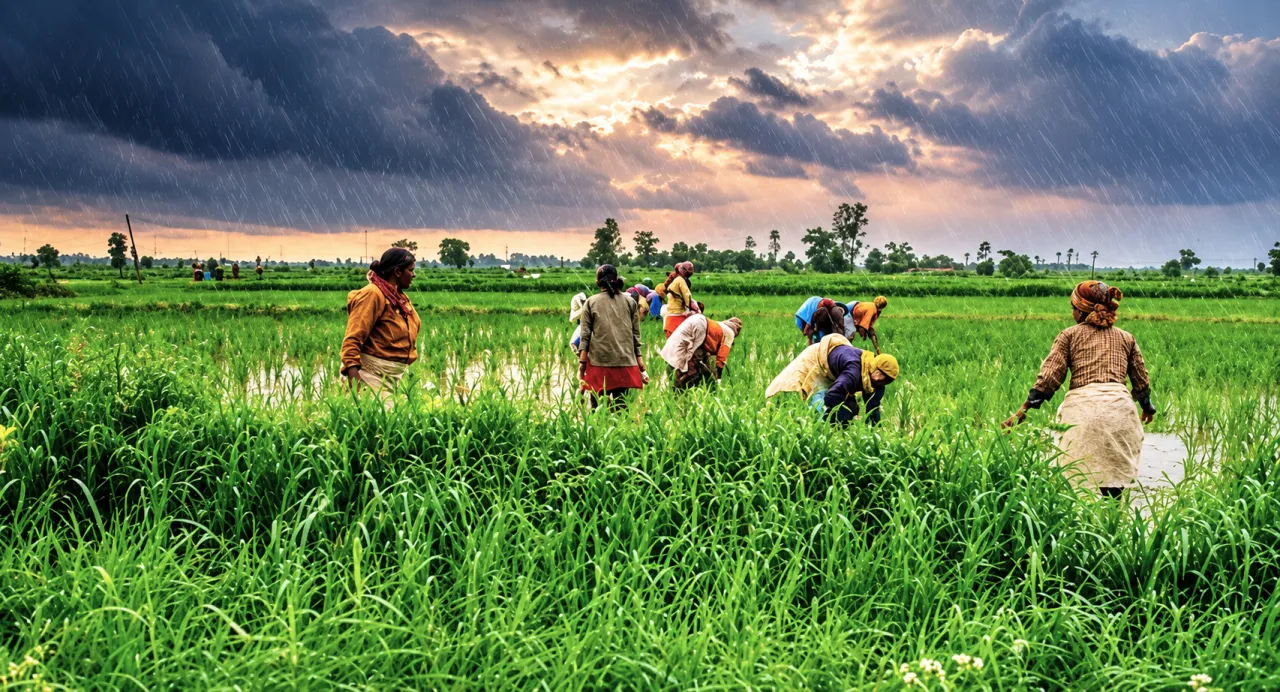
Every spring, long before the first clouds gather over Kerala, a single number begins to shape decisions across rural India. It is the monsoon forecast, and for millions of families who farm without assured irrigation, it can decide what to sow, how much seed to buy and whether to borrow.
Who makes the forecast. The India Meteorological Department (IMD) issues a long-range outlook for the southwest monsoon, which runs from June to September and delivers roughly three-quarters of the country's annual rainfall. The first forecast usually comes in April, followed by an update around the time the monsoon arrives, with more detail by month and region.
The forecast is expressed as a percentage of the long-period average, a benchmark built from decades of rainfall records. IMD treats rainfall within about four per cent of that average, either side, as normal. Anything well below is classed as below normal or deficient; anything well above is above normal or excess.
What goes into the model
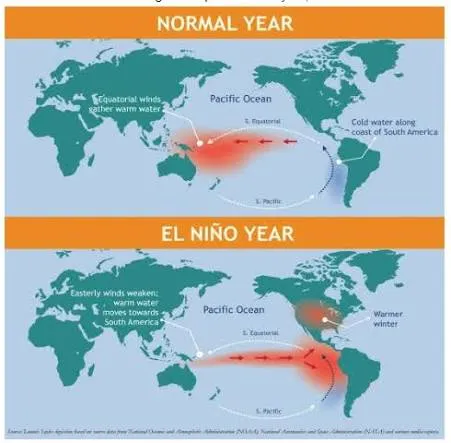
Forecasters look far beyond India's borders. Sea surface temperatures in the Pacific matter, because a warm phase known as El Niño has often coincided with weaker monsoons. The Indian Ocean has its own see-saw, called the Indian Ocean Dipole, which can strengthen or dampen rainfall. Snow cover over Eurasia, pressure patterns and wind behaviour also feed in.
Today IMD blends traditional statistical methods with dynamical models, which simulate the atmosphere and oceans on powerful computers. Neither approach is perfect. A forecast of 'normal' for the whole country can still hide dry spells in one state and floods in another.
Why it matters to you
Kharif crops such as rice, cotton, soybean and many pulses depend heavily on monsoon rain. A poor season can push up food prices in cities, slow rural spending on everything from two-wheelers to soap, and strain reservoirs that supply drinking water and electricity. That is why policymakers, traders and the Reserve Bank all watch the forecast closely.
For farmers, the more useful information is often local: when rain will arrive in their district and whether it will be spread out or bunched into a few heavy days. Block-level advisories, delivered by text message and through agricultural extension services, are becoming more common.
The science keeps improving, but the monsoon remains one of the most complex weather systems on Earth. Better forecasts will not remove the risk; they help families manage it a little more wisely.